
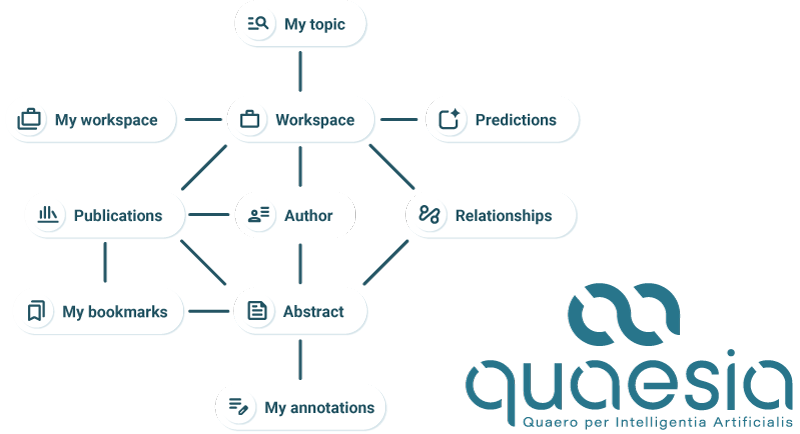
You know the pain: Traditional engines waste your time on keyword matching, leaving you to manually hunt for connections. Missing a single link can delay a breakthrough.
Quaesia isn't just another database; it’s a living map of biomedical intelligence. The synthesis of 300 million sentences into a network of 630 million semantic links offers a fine understanding of the biomedical landscape.
Leverage non-generative AI models to discover verified research without the risk of synthetic hallucinations or data distortion.
The architecture focuses on semantic mapping> and factual extraction, ensuring that every result is a direct, traceable reflection of the original peer-reviewed source
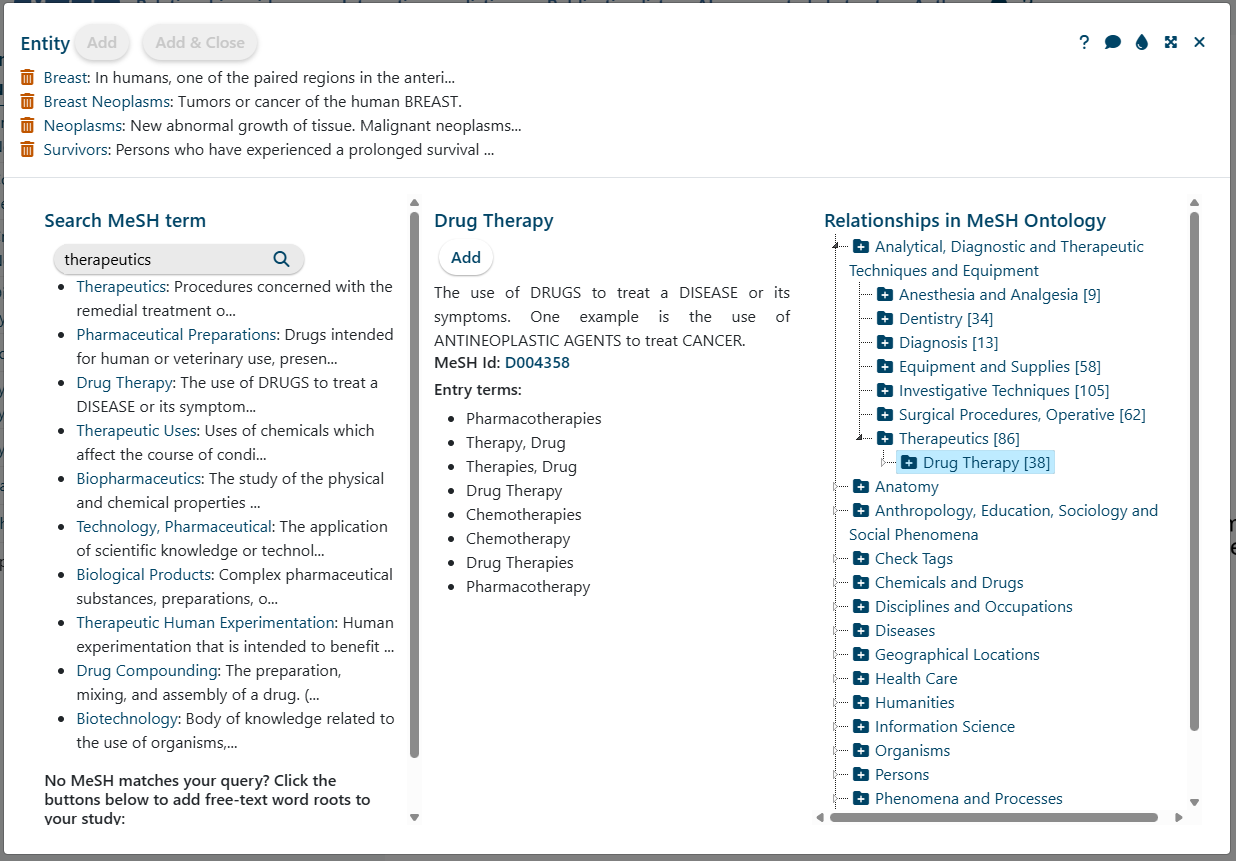
Master your research with Quaesia’s concept-driven query builder. By integrating the MeSH thesaurus, the engine automatically accounts for synonyms and acronyms while allowing you to engineer high-precision composite entities. Fine-tune your results with weighted searches or flexible keyword fallbacks for unmatched control over your biomedical discovery.
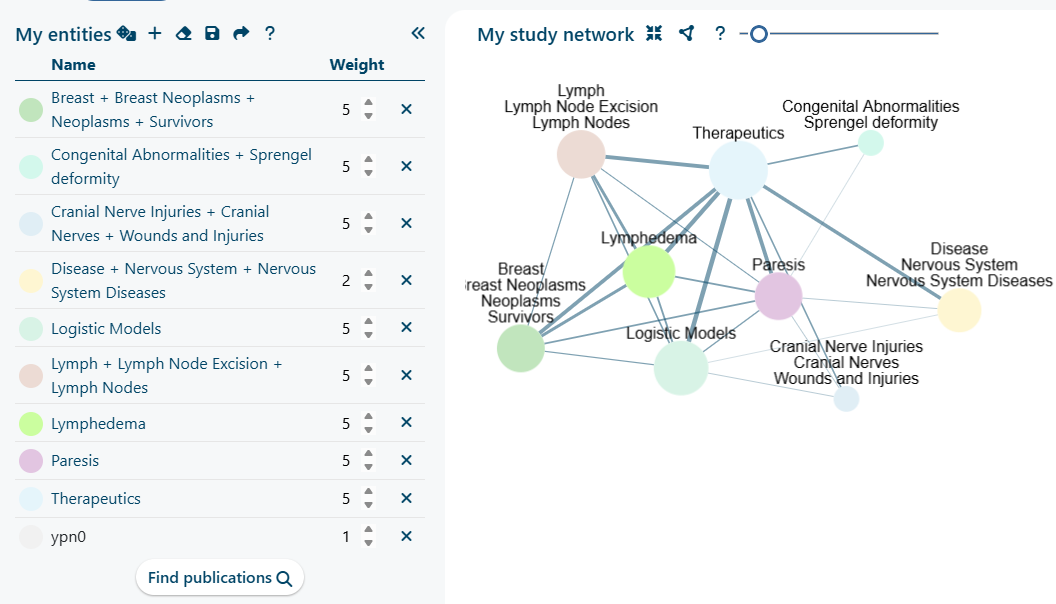

Ranks the 40 million abstracts based on the biological entities and keywords you specified
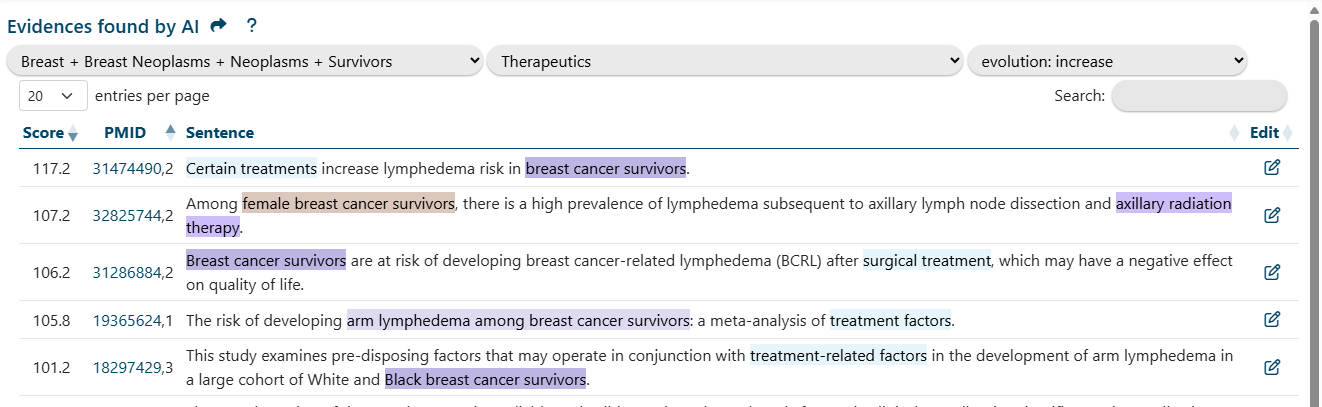
Retrieve the most relevant article sentences that explain the relationship between two entities, all within the context of your specific query
Experience prioritized discovery across 40 million abstracts, ranked specifically for your unique workspace. Quaesia extracts granular, sentence-level evidence directly from interaction maps, allowing you to validate relationships in context. Refine your research using 39 interaction types to filter results, from molecular mechanisms to clinical advantages.
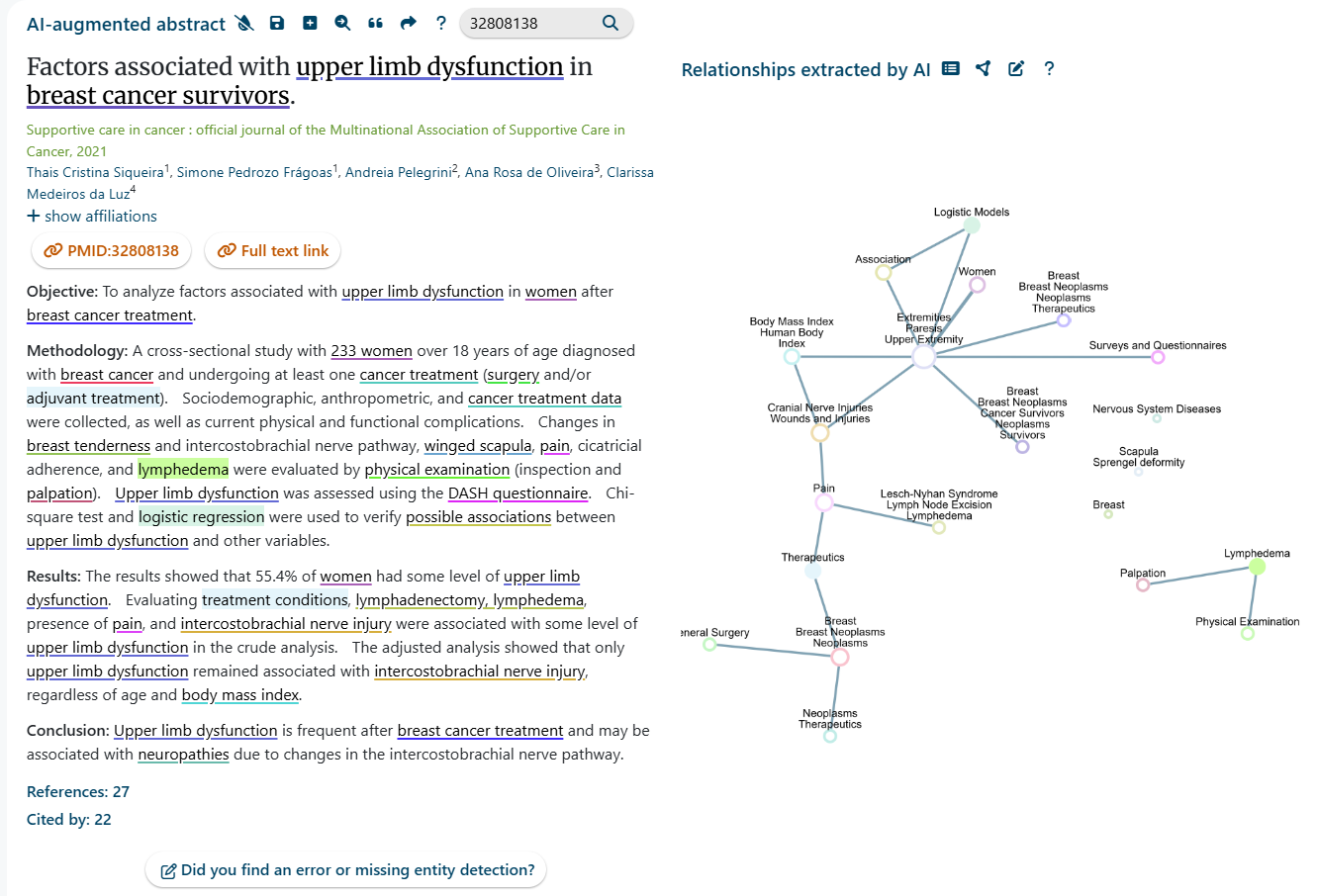
Accelerate your literature review with AI-augmented abstracts that highlight query-relevant entities and suggest new concepts. Beyond the text, Quaesia visualizes relationship graphs with one-click access to supporting evidence. Dive deeper with advanced author profiles, featuring detailed publication analytics and specialized MeSH expertise mapping.
Thanks to manual annotations, you can significantly accelerate your reading of an abstract with the relevant entities highlighted.
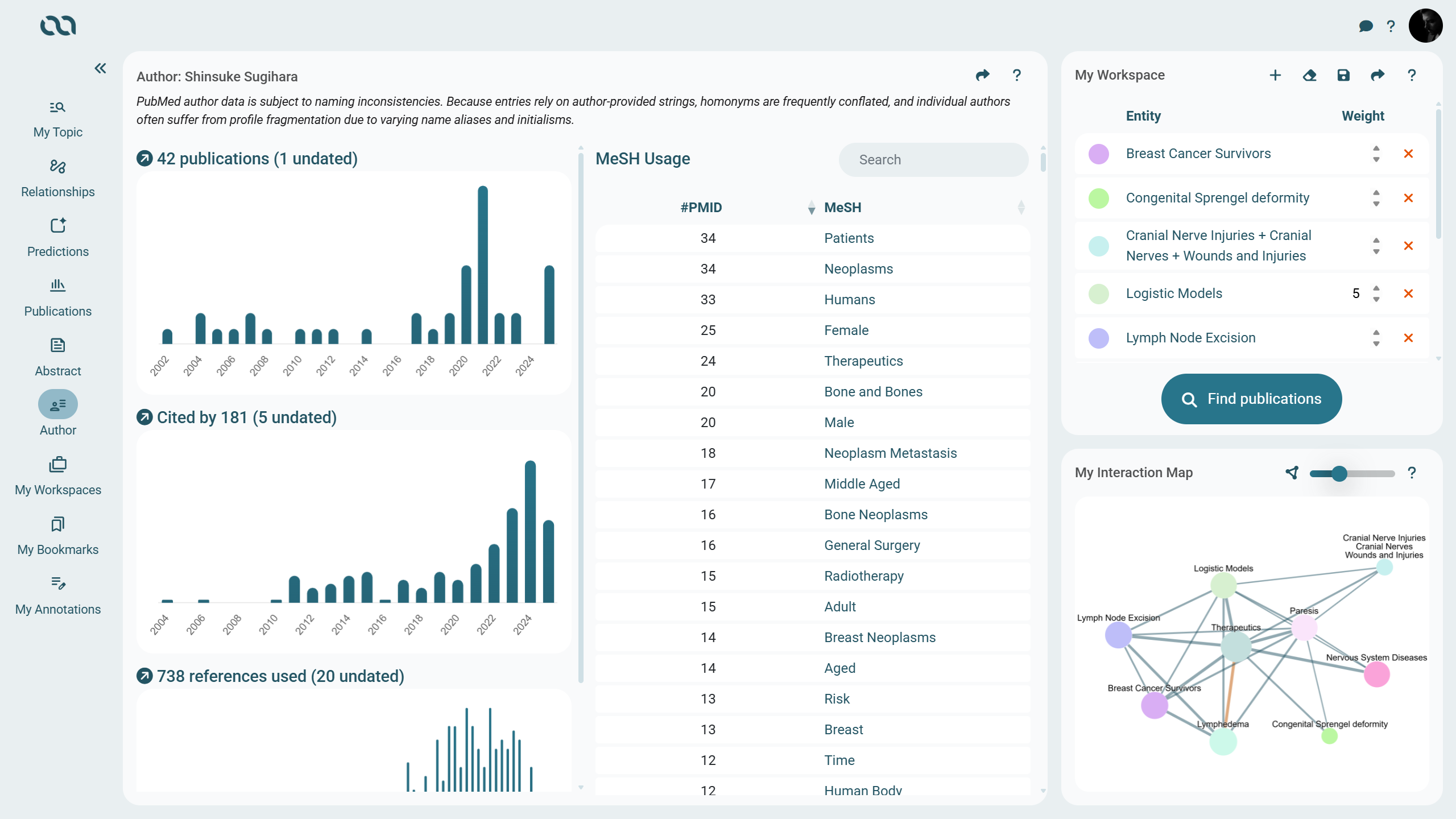
The dedicated author page features three insightful histograms: one detailing the author's publications, one showing publications that cite the author, and one displaying all references utilized. Additionally, a table provides a complete list of MeSH terms used by the author
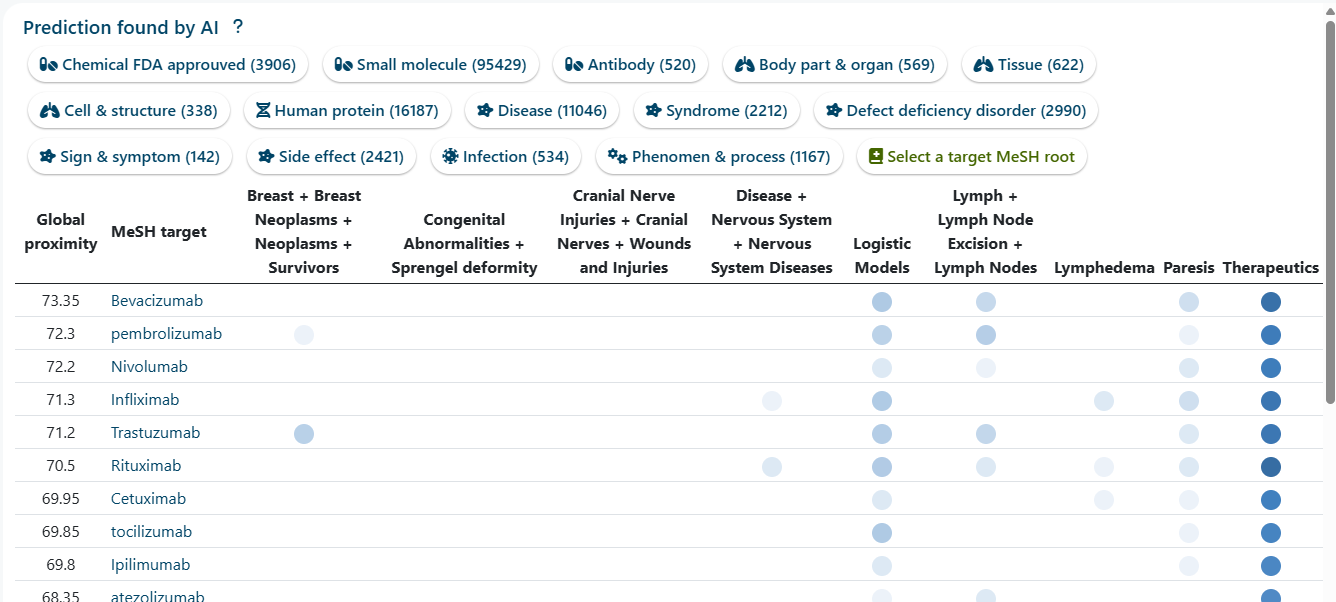
Anticipate the next breakthrough with Quaesia’s AI-Driven Prediction Module. By analyzing the vast relationship graph, the model forecasts potential unknown links tailored to your specific query. Customize your discovery using the MeSH hierarchy and validate every prediction with direct textual evidence sourced from the extensive database.
Sync your research across sessions by connecting your LinkedIn or Google account with persistent storage for your studies and curated publication lists.
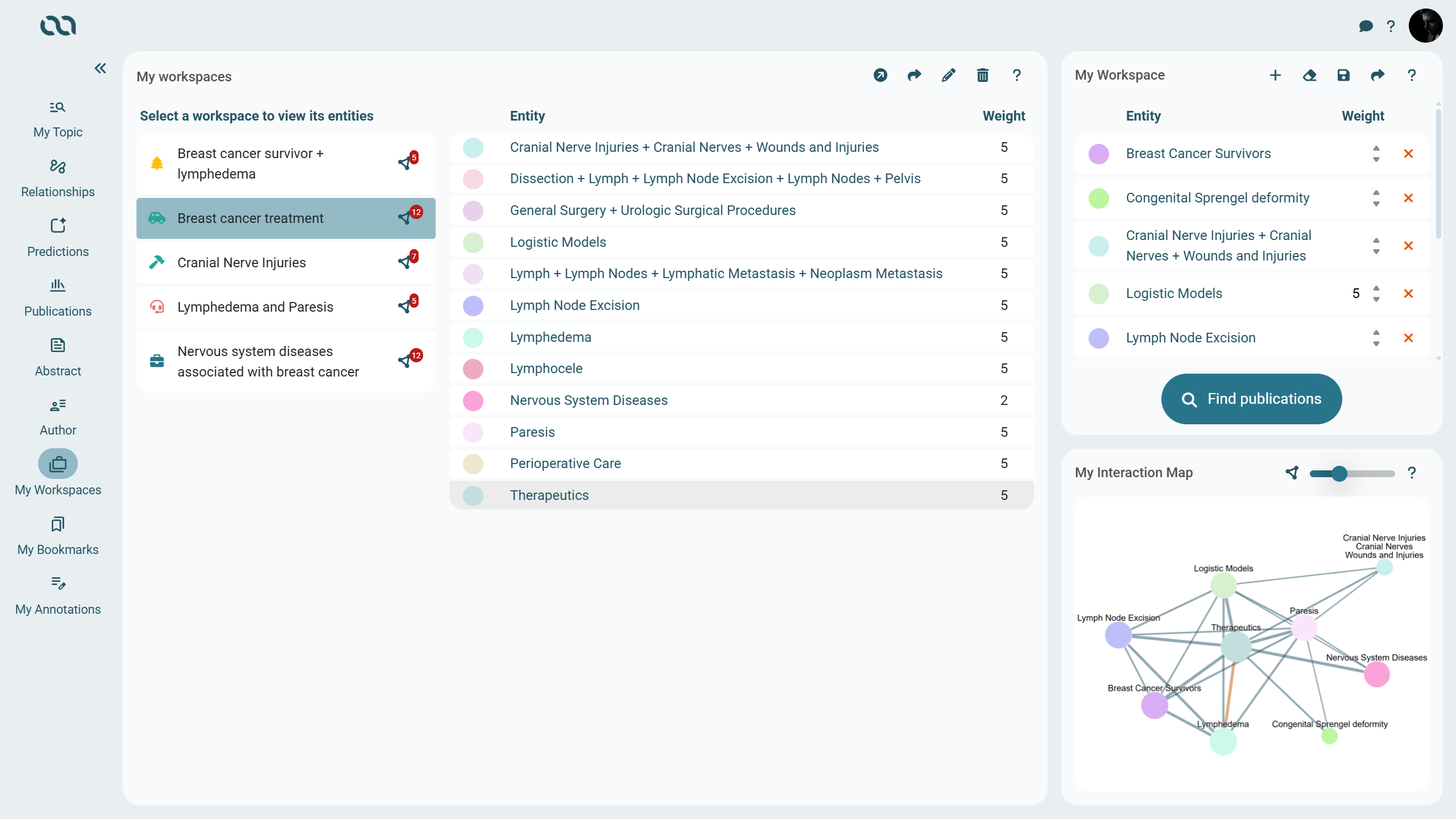
Once you connect using a LinkedIn or Google account, you can save your studies

You can also save your lists of articles
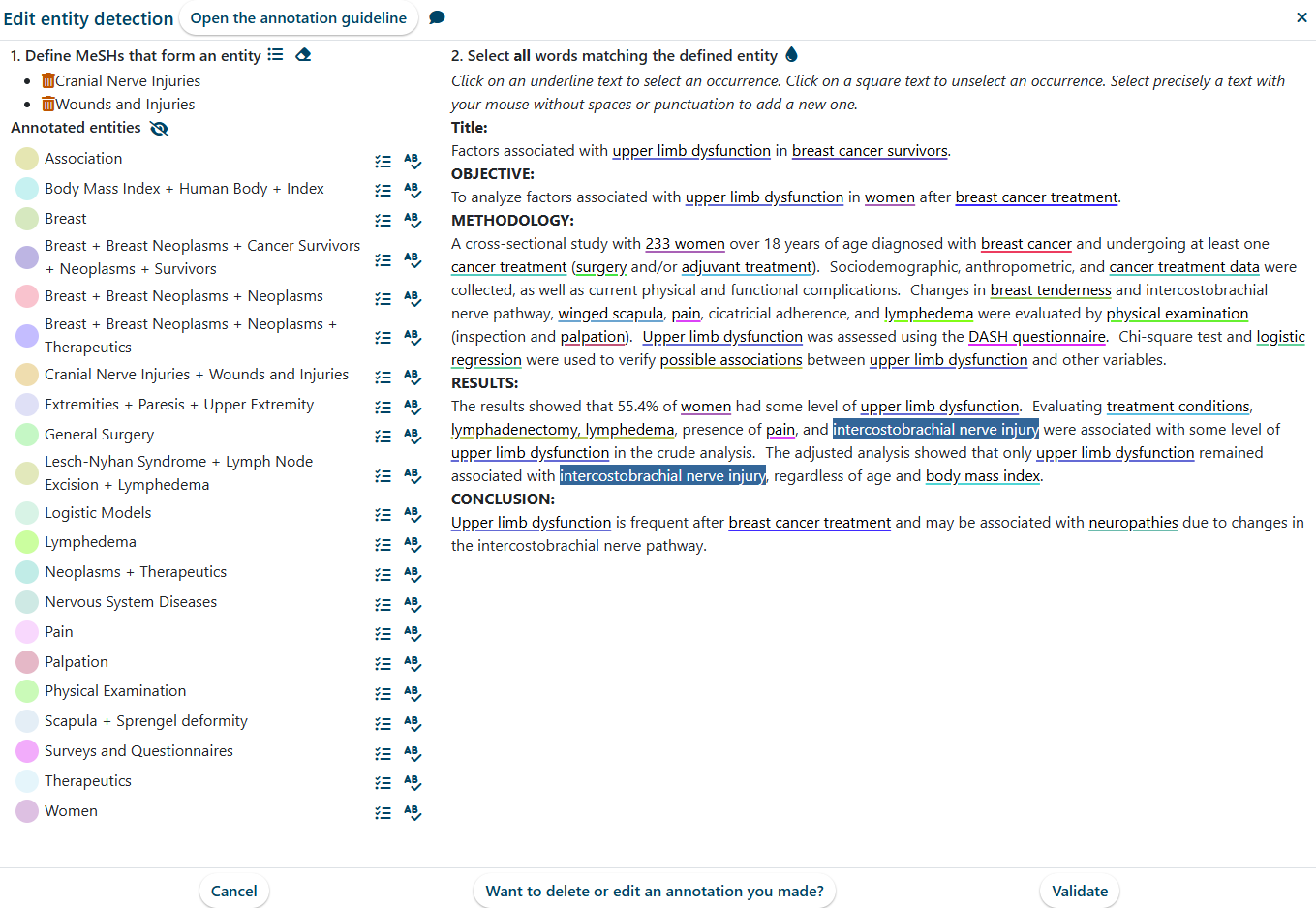
Interface annotation dedicated to the detection of biomedical entities in texts
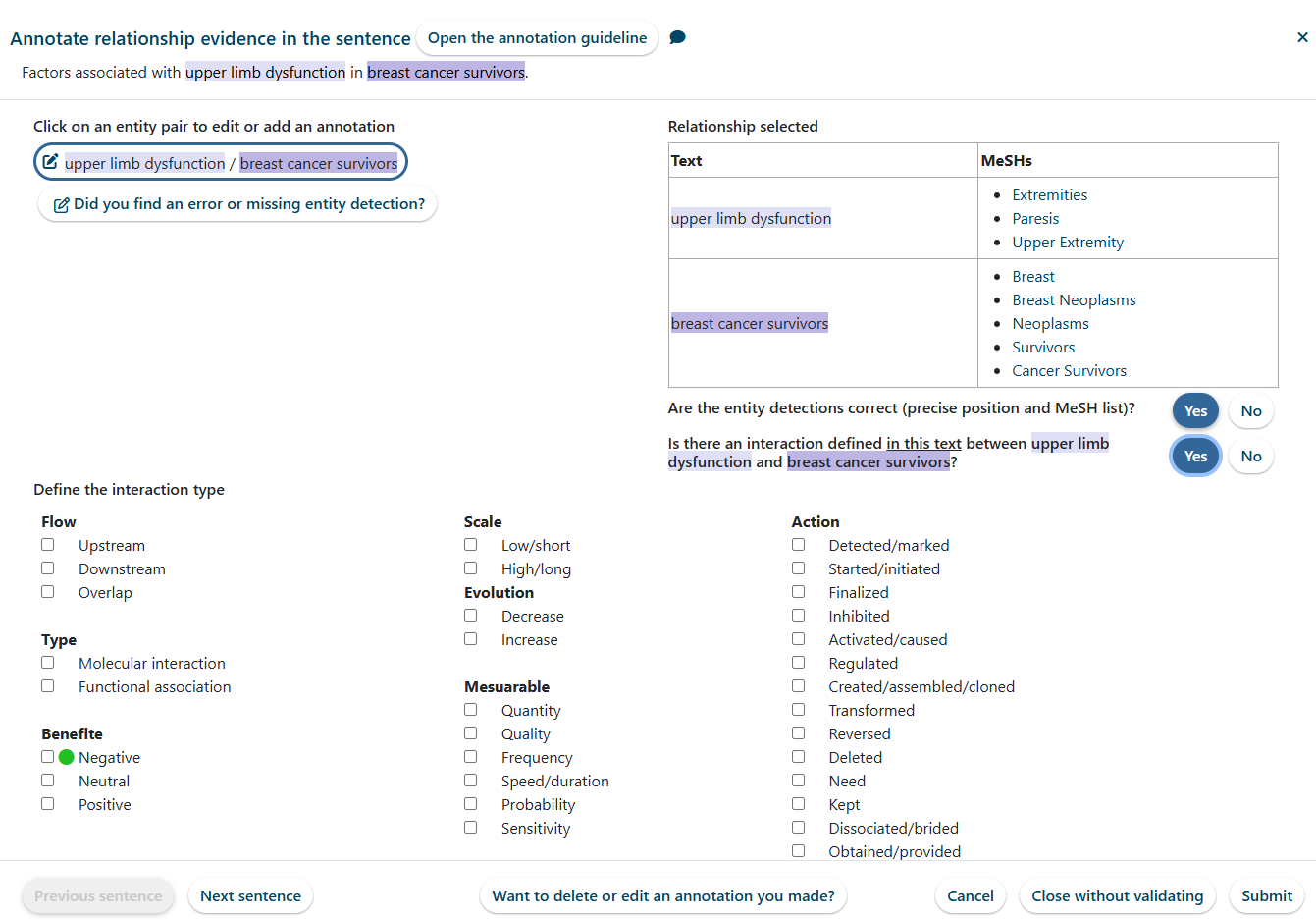
Interface annotation dedicated to the relationship evidence extraction in a sentence

You can also review all the annotations you have personally added to help correct and improve automated AI systems
Bridge the gap between automated AI and human expertise with a set of dedicated tools. Your expert feedback directly refines Quaesia’s AI-driven detection, ensuring a more accurate discovery engine for the entire community. Take control to your full annotation history, allowing you to review and manage your contributions.
Experience these premium tools for free every Sunday and during a 3-day introductory trial following your first login.
As an independent project led by a PhD in AI with 15 years of experience in Data Science and Information Retrieval, Quaesia does not rely on corporate venture capital. However, maintaining this platform available and processing 1.5 million new publications annually requires significant server and GPU power.
Without your backing, this engine cannot survive. By donating on Ko-fi, you are ensuring that an independent alternative remains available and continues to evolve for the entire scientific community.
Need to integrate our 630 million semantic links> directly into your internal pipeline? Quaesia’s high-precision biomedical graph is available for full database download.
Whether for offline large-scale mining or training your own proprietary models, fill out a quick contact form to receive your dedicated download access link.
| Score | cSentId | PMID | Sentence | Edit |
|---|
| Score | Target |
|---|
| Score | Target | Link to relationship evidence |
|---|
| C | N | Entity | Weight | R |
|---|
Unlike classical search engines, which primarily index keywords in abstracts, we've developed Non-Generative AI models to detect specific biomedical concepts and determine their potential interactions.
Thanks to these advanced models, I have constructed a massive network of interaction between biomedical concepts, comprising more than 500 million links. This platform is the direct result of my efforts to provide you with an intuitive interface to query this immense network.
Because automated systems sometimes struggle with identifying the precise references within a text, I am building an expert community to manually produce these annotations. I encourage you to start by applying your expertise to the correction of your recent published article: